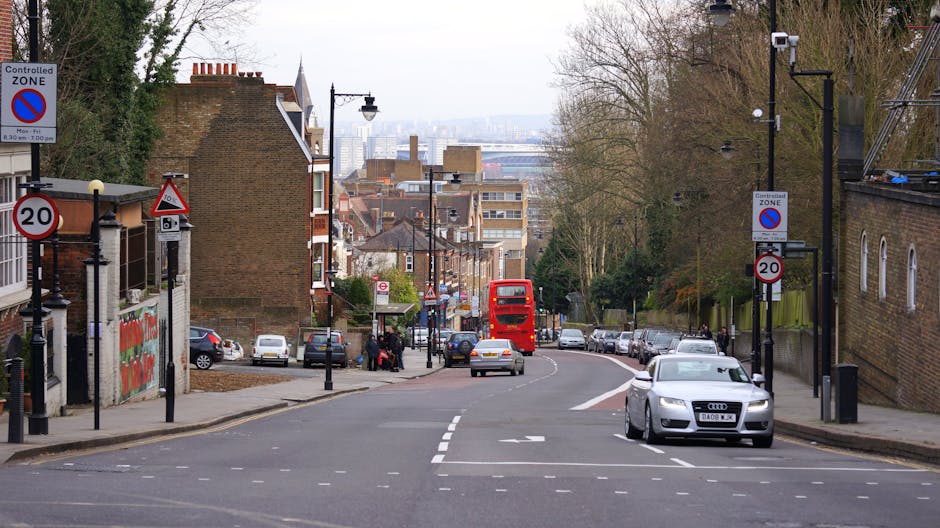
What to know about Camden Council parking for Hampstead removals
If you are moving house in Hampstead, parking can be the difference between a calm move and a day full of stopped clocks, frustrated neighbours, and a removals van circling the block. Camden's streets can be tight, busy, and not especially forgiving, so understanding What to know about Camden Council parking for Hampstead removals is not just useful - it is one of the most practical parts of the whole job.
The good news? With a bit of planning, you can usually avoid the worst of the stress. In this guide, we break down how parking arrangements tend to work, why they matter, what to ask your removal company, and the common mistakes that catch people out at the last minute. To be fair, a lot of moving-day headaches start with one simple thing: the van had nowhere legal to stop.
We will also cover a few real-world considerations that people often miss, such as bay suspensions, narrow residential roads, timing around school runs, and how to plan if you are moving from a flat with awkward access. If you are already comparing moving options, you may also find it helpful to look at house removals, man and van, and home moves support while you plan the parking side properly.
Table of Contents
- Why Camden Council parking matters for Hampstead removals
- How parking arrangements usually work
- Key benefits and practical advantages
- Who needs this and when it makes sense
- Step-by-step guidance
- Expert tips for better results
- Common mistakes to avoid
- Tools, resources and recommendations
- Law, compliance, standards and best practice
- Options, methods and comparison table
- Case study or real-world example
- Practical checklist
- Conclusion
- Frequently asked questions
Why Camden Council parking matters for Hampstead removals
Parking is not a side issue in Hampstead; it is part of the moving plan. Many streets in and around Hampstead are narrow, busy, or already heavily controlled, which means a removals van cannot always just pull up and unload. If you are moving on a weekday, during school drop-off times, or at a busy weekend moment, the pressure on the road gets even worse.
For removals, the main issue is time. Every extra minute spent hunting for a space, double-checking restrictions, or moving boxes further than expected eats into the schedule. That can lead to extra labour time, more risk of damage, and a move that feels far more chaotic than it should. And let's face it, nobody wants to be carrying a sofa down a hill while a delivery lorry waits behind them.
Camden parking rules matter because they affect:
- where the van can stop legally
- how close the vehicle can get to your front door
- whether unloading is likely to be quick or awkward
- how much manual carrying the team needs to do
- whether you need bay suspension or another form of parking control
In practical terms, the parking plan is part of protecting your move. It reduces delay, keeps access safer, and helps your removal team work efficiently. If your move also involves packing support, it can be worth combining the logistics with packing and unpacking services so the day flows more smoothly from room to van.
How Camden Council parking for Hampstead removals usually works
Every street is different, so there is no one-size-fits-all answer. In Hampstead, the process usually starts with checking whether the road outside your property has resident bays, pay-and-display bays, single yellow lines, loading restrictions, or other controls. In some cases, you may also need to think about whether the removals vehicle can fit safely without blocking traffic.
Most moving arrangements are based on a few practical steps:
- Check the street layout outside both addresses, if possible.
- Identify restrictions such as permit-only bays, loading limits, and time controls.
- Decide whether a formal parking arrangement is needed for the removals van or truck.
- Allow enough time for unloading, especially if there are stairs, lifts, or long carries.
- Keep the moving crew informed so they can plan the vehicle size and arrival window properly.
Sometimes, the simplest answer is to use a smaller vehicle if the street is especially tight. A larger lorry sounds efficient, but if it cannot reach the property easily, the move can become slower, not faster. A well-chosen removal van or moving van may be the smarter choice for some Hampstead addresses.
One thing people often underestimate is how long loading really takes. A two-bedroom flat on a controlled street can still take longer than expected if the front door is a few houses away from the nearest stopping point. Those extra steps matter. Every box counts, especially when the kettle is already packed.
What is usually being arranged?
Depending on the road and the vehicle, parking arrangements can involve making sure the van can use an existing bay, planning around restrictions, or asking for temporary changes where available. The exact method depends on the address and timing, so it is always best to treat the street itself as the starting point, not the calendar.
For business moves, the same logic applies, but the stakes can be higher because office equipment, desks, and files need quicker access. In those cases, office removals or broader commercial moves planning should include parking and loading access from the beginning, not as an afterthought on the morning itself.
Key benefits and practical advantages
Getting the parking side right brings benefits that are very tangible on moving day. It is not just about avoiding a penalty or a complaint. It is about making the whole move calmer, faster, and less physically demanding.
- Fewer delays: The team starts loading sooner and spends less time searching for a legal stopping point.
- Lower stress: You are not improvising outside the house while the clock runs on.
- Safer lifting: Shorter carry distances reduce the chance of bumps, slips, and strain.
- Better scheduling: A realistic parking plan helps the removals company estimate the job properly.
- Less neighbour friction: Clear access is generally better for everyone on a busy Hampstead street.
There is also a less obvious benefit: a good parking plan often improves the mood of the whole move. That sounds a bit soft, maybe, but it matters. If the first ten minutes go well, people settle. If the van is late, blocked, or parked half a street away, everyone starts the day on edge.
If you are using a smaller service, such as man with a van or man with van removal, the parking plan can be even more important because those jobs often rely on quick turnarounds and precise timing.
Who this is for and when it makes sense
This matters for anyone moving in Hampstead, but it is especially relevant if your property sits on a narrow residential road, near a controlled parking zone, or on a street where stopping space is limited. Ground-floor homes are not always simple either; they may still sit on roads with heavy traffic or awkward loading conditions.
You should think about parking planning if you are:
- moving from a flat with stair access or a shared entrance
- relocating from a house on a tight Hampstead street
- booking a larger removals vehicle
- moving during a busy weekday morning
- combining household and furniture transport
- arranging an office move or business relocation
It also makes sense if you are trying to keep costs under control. A well-planned parking arrangement can save time, and time is often where moving costs creep up. If budget is one of your concerns, take a look at pricing and quotes early so you can see how access issues may affect the estimate.
Truth be told, a lot of the people who benefit most from parking planning are the ones who least expect trouble. They think, "It's only a quick move." Then the van arrives and the nearest available space is two doors away, behind a tree, opposite a loading restriction. Small issue? Not really.
Step-by-step guidance
Here is a practical way to handle Camden Council parking for a Hampstead removal without overcomplicating things.
- Walk the street yourself before moving day if you can. Look at bays, yellow lines, signs, and any obvious access bottlenecks.
- Measure the practical carry distance from the likely stopping point to your front door. Even a few extra metres can matter.
- Tell your removal company about access early. The more detail they have, the better they can plan the vehicle and crew.
- Decide whether the move needs formal parking support or whether a carefully timed stop will be enough.
- Prepare for loading first, not last. Leave boxes, furniture, and dismantled items near the exit where possible.
- Keep essential items separate so they are not buried in the van while you wait for the next trip.
A good moving plan is less about perfection and more about reducing avoidable friction. If you are arranging a bigger domestic relocation, services like house movers or house removals can be matched to the access conditions at your property, which is often the difference between a tidy move and a messy one.
One small but useful tip: if your departure or arrival address has a particularly awkward stretch of road, ask the removals team how they would stage the vehicle. Sometimes the best answer is not "park right outside," but "park where we can turn safely and make the carry as short as possible." That sounds obvious, but in practice, people forget it.
Expert tips for better results
Having seen plenty of moving days unfold, a few habits consistently make things easier. Nothing dramatic. Just sensible, real-world adjustments.
- Plan around peak traffic where possible. Even a small timing shift can help in Hampstead.
- Use the right size vehicle. Bigger is not always better on narrow streets.
- Keep the route clear inside the property. Hallways full of shoes, bags, and lamps slow everything down.
- Tell neighbours if a van may temporarily occupy shared space. A quick conversation can prevent a complaint.
- Have someone ready at both addresses. It helps if the team is not left guessing which door, gate, or entry point to use.
Another practical point: if you are moving a few heavy items only, a service such as furniture pick-up can sometimes be more efficient than booking a full-scale move. That does not remove the parking issue, of course, but it can simplify how long the vehicle needs to stop outside.
And if you want reassurance on how your belongings are handled during the move, it is worth reading about insurance and safety alongside your parking plan. Access, handling, and protection really do go together.
Common mistakes to avoid
Most parking problems during Hampstead removals are predictable. That is the annoying part. The same mistakes come up again and again.
- Leaving parking to the last minute. This is the big one. By then, your options are far narrower.
- Assuming the van can stop anywhere briefly. In a controlled area, "just for five minutes" may still be a problem.
- Choosing a vehicle without checking the street. A larger truck may not suit every road.
- Ignoring unloading distance. Short parking can still mean a long carry if the bay is far from the entrance.
- Forgetting about return trips. It is easy to focus on the first load and forget the second or third run.
There is also a softer mistake: assuming someone else has already thought about it. Sometimes they have. Sometimes they really haven't. A quick question at the planning stage can save you a lot of awkwardness later on.
For example, if you are arranging a move through removals near me searches, make sure the provider understands the actual Hampstead street conditions rather than just the postcode. Those small local details matter more than people expect.
Tools, resources and recommendations
You do not need a whole spreadsheet empire to organise parking, but a few simple tools can help.
- Street photos: Take a few pictures of the road outside your property, especially any signs or bay markings.
- Measurements: Note vehicle width, access width, and the likely carry distance.
- Moving-day timeline: Write down arrival, loading, travel, and unloading windows.
- Property notes: Mention stairs, lifts, entry codes, gates, and any awkward corners.
- Contact list: Keep the removal company and any key household contacts easy to reach.
If you are coordinating a move that includes dismantled furniture, lifting heavy pieces, or multiple rooms, using a professional removal company can take a lot of pressure off the day. And if you want help before the van even arrives, removal services can cover the planning, loading, and transport side in one place.
For people juggling other practicalities too, there are a few related pages worth understanding: about us for company background, terms and conditions for service expectations, and privacy policy if you are sharing moving details online. Not exciting, I know, but useful.
Law, compliance, standards and best practice
Parking and loading in London are not just practical concerns; they are also matters of compliance. That means the safest route is always to follow the relevant street restrictions and to work within the rules set for the location. If a bay is controlled, treat it as controlled. If loading is restricted at a certain time, plan around it rather than hoping for leniency.
For Hampstead removals, best practice usually means:
- checking the site conditions before the move
- using a vehicle size that suits the road
- avoiding obstruction of traffic or pedestrian access
- keeping communication clear between the mover and the property owner
- allowing time buffers for delays, lift access, or stair carries
If you are using a professional team, it should also be clear that they operate with sensible safety procedures. That includes safe lifting, vehicle positioning, and attention to property damage risks. You can read more about those expectations in the company's health and safety policy.
There is a wider compliance point too. Good moving practice should be transparent, fair, and organised. That is why details such as payment and security matter, as do service boundaries and complaint handling. If something goes wrong, it is easier to resolve when the process is clear from the start.
In short: stay lawful, stay practical, and do not assume street space is available just because it looks empty at a glance. Parking enforcement can be quicker than people expect. A quiet-looking road at 8:30 can become a very different place by 9:00.
Options, methods and comparison table
Different moves call for different parking approaches. Here is a simple comparison to help you decide what fits your situation best.
| Parking approach | Best for | Advantages | Watch-outs |
|---|---|---|---|
| Park close to the property | Short domestic moves with manageable street access | Fast loading, less carrying, simpler coordination | May not be possible on restricted or narrow roads |
| Park a little further away | Busy Hampstead streets with limited stopping space | More realistic, often easier to arrange | Longer carry distance and more time needed |
| Use a smaller vehicle | Flats, partial moves, or streets with tight access | Easier manoeuvring, less disruption | May require extra trips if volume is underestimated |
| Plan a formal parking arrangement | Moves needing structured access or controlled stopping | More certainty, better scheduling | Needs advance planning and correct preparation |
There is no perfect option for every street. The best choice is usually the one that balances access, timing, and vehicle size without making the crew fight the road itself. That sounds simple, but it saves a lot of grief.
Case study or real-world example
Picture a Hampstead flat move on a weekday morning. The property is on a residential street with limited stopping space, and the nearest obvious bay is already busy. The couple moving out initially assume the van can stop right outside for a quick load. In reality, that is unlikely.
The smarter plan would be to check the road in advance, use a vehicle that suits the access, and schedule the arrival so the team can load in one steady run. If the van parks a short distance away, the move is still perfectly manageable - just slower. The key is that everyone knows this before the boxes are stacked by the door.
In that kind of situation, a service like moving truck hire may be less suitable than a smaller removal van, especially if manoeuvrability is the real issue. Sometimes the right answer is not the biggest vehicle, but the one that fits the street and the schedule.
Expert summary: In Hampstead, the best parking plan is usually the one that respects the street first and the timetable second. If the vehicle can access the property safely, the rest of the move becomes much easier.
We have seen plenty of moves where a ten-minute parking rethink saved half an hour of carrying. Not glamorous. Very effective.
Practical checklist
Use this before moving day so you are not improvising when the van arrives.
- Confirm the move date and arrival window
- Check the street for permit-only bays, yellow lines, and loading controls
- Take photos of the property frontage and vehicle access
- Measure any tight kerbs, gates, or narrow turns
- Tell the removals team about stairs, lifts, and long carry distances
- Decide whether the move needs a smaller van or a larger vehicle
- Prepare boxes and furniture near the exit where possible
- Keep essential documents, keys, and medicines separate
- Let neighbours know if access may briefly be busier than usual
- Build in extra time for traffic or parking delays
And one more thing: if something is unclear, ask. A five-minute conversation can save an hour of bother.
Get a free quote today and see how much you can save.
Conclusion
What to know about Camden Council parking for Hampstead removals comes down to one simple idea: parking is part of the move, not separate from it. If you plan access well, you reduce stress, save time, and make the day safer for everyone involved. If you ignore it, even a well-organised move can feel messy very quickly.
Hampstead has its own rhythm - tight roads, busy periods, and a lot of moving parts. That is exactly why the parking question deserves proper attention before the first box leaves the hallway. Handle that bit well, and the rest tends to feel much more manageable.
If you are approaching a move soon, take the access plan seriously, keep it practical, and choose a team that understands the local conditions. Small preparation, big difference. And honestly, that is what makes the day feel human and under control rather than rushed and chaotic.
Frequently Asked Questions
Do I need special parking arrangements for a Hampstead removal?
Not always, but many Hampstead moves benefit from some kind of advance parking plan. If the street is controlled, narrow, or busy, it is worth checking access early so the van can stop legally and unload efficiently.
How far in advance should I think about parking for a move?
As early as you can. Once the move date is fixed, parking should be one of the first logistics you look at. Leaving it until the day before is where problems usually start.
Can a removals van just stop outside for a few minutes?
Sometimes, but you should never assume that. Even a short stop can be restricted depending on the road markings, time of day, or local controls. A quick check is always better than hoping for the best.
What if the street is too narrow for a large truck?
Then a smaller vehicle may be the better option. On some Hampstead roads, manoeuvrability matters more than capacity. A slightly smaller van can actually make the whole move quicker.
Does parking affect the cost of removals?
It can. If access is awkward, the job may take longer or require extra handling. That is why it is sensible to discuss access when getting a quote rather than after the move has already begun.
What should I tell the removal company about parking?
Tell them about road width, bay restrictions, loading space, stairs, gates, lifts, and any likely carry distance from the vehicle to the door. The more detail you give, the better they can plan.
Is parking harder for flat moves than house moves?
Often, yes, especially if the flat is on a busy or restricted road and the access point is shared. That said, some houses on narrow streets can be just as challenging. The property type is only part of the story.
What happens if there is no space available on the day?
The team may need to wait, reposition the vehicle, or carry items from a further point. That usually slows everything down, so it is better to have a backup plan in mind before arrival.
Are office moves and house moves different when it comes to parking?
Yes, mainly because office moves often need faster loading, more equipment, and tighter scheduling. Parking and access tend to be even more important when multiple desks, IT items, or archive boxes are involved.
What is the most common parking mistake people make?
Assuming the obvious space outside the property will still be available when the van arrives. On a busy London street, that is a risky bet. A little preparation goes a long way.
Should I choose a man and van service for a tight Hampstead street?
It can be a good fit for smaller moves or difficult access, because these services often work well with compact loads and flexible parking needs. For a larger house move, though, you may need something more structured.
Where can I find more help with the move itself?
You can explore removals, movers, and house removalists if you want to compare the moving side alongside parking and access planning.